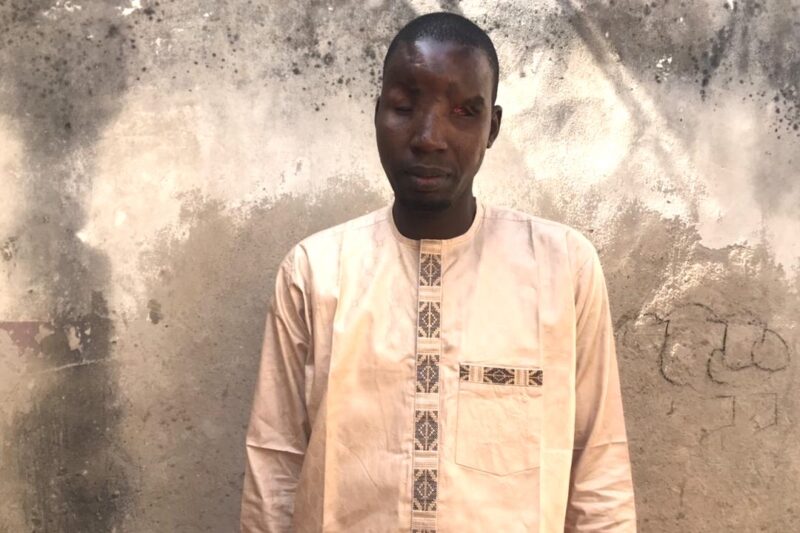
The morning sun filters through the classroom windows of the Borno special school for the blind as 33year old Abubakar Modu Sheriff runs his fingers across the raised dots on a Braille sheet. His students sit quietly, listening to his steady voice. For many of these children, he is more than a teacher, he is living proof that a life reshaped by disability can still be full of purpose.
Yet, Abubakar, known to many as Rawana Ustaz, was not born blind.
A Life Built From the Onion Markets
After completing secondary school, Abubakar went into the onion business to support his family. “My parents were less privileged,” he explains. “So I started travelling to Sokoto, Kano, Geidam in Yobe state, and places in Marte and Monguno LGA Borno State to buy onions in bulk.”
Every Tuesday, he and four other traders traveled along the Maiduguri–Geidam route with a familiar driver, returning home on Wednesdays. It was a routine he trusted and one that would change forever in 2015.
The Ambush on Damaturu–Geidam Road
“I wasn’t born blind,” he says. “It happened close to Geidam market.”
On that day, Boko Haram insurgents emerged from the roadside and opened fire on their vehicle. The driver, in panic, accelerated in hopes of escaping, but soon realized they were surrounded. He told the passengers to recite their shahada.
The driver eventually escaped, but two passengers were shot. One in the stomach. Abubakar was struck in the face.
“I lost my eyes instantly,” he recounts. “I became unconscious.”
He woke up in a hospital alive, but blind.
Choosing Faith Over Fear
“One thing I always say is Alhamdulillah,” he reflects. “I did not lose my life but only my sight.”
His doctors, impressed by his intelligence, encouraged him to continue his education instead of giving in to despair. They advised him to enroll in the School for the Blind in Maiduguri.
“When I was discharged, I went myself,” he says. “I met the principal, Mallam Ayuba, and told him I wanted to learn again.”
To adapt to his new reality, he began from primary level, learning Braille and orientation techniques. Surrounded by much younger children, he remained undaunted.
“I didn’t feel discouraged. I accepted it.”
His quick learning impressed his teachers, who promoted him faster than usual.
From Blind School Student to College Graduate
After completing secondary school again, Abubakar gained admission into the College of Business, Science and Management Studies in Konduga. He was the only blind student in his cohort.
“I always sat in the front. Even if I came late, my classmates kept a seat for me,” he smiles.
He wrote exams with a typewriter and relied on determination more than anything else.
“With my situation now, all I can say is Alhamdulillah. I achieved more than I imagined.”
After graduating, the Borno State Government employed him as a teacher in the same school where he finished his secondary education.
“I feel happy every day, teaching in the school that shaped me.”
But he has one dream left: “I want to continue my education. I want to become a professor one day.”
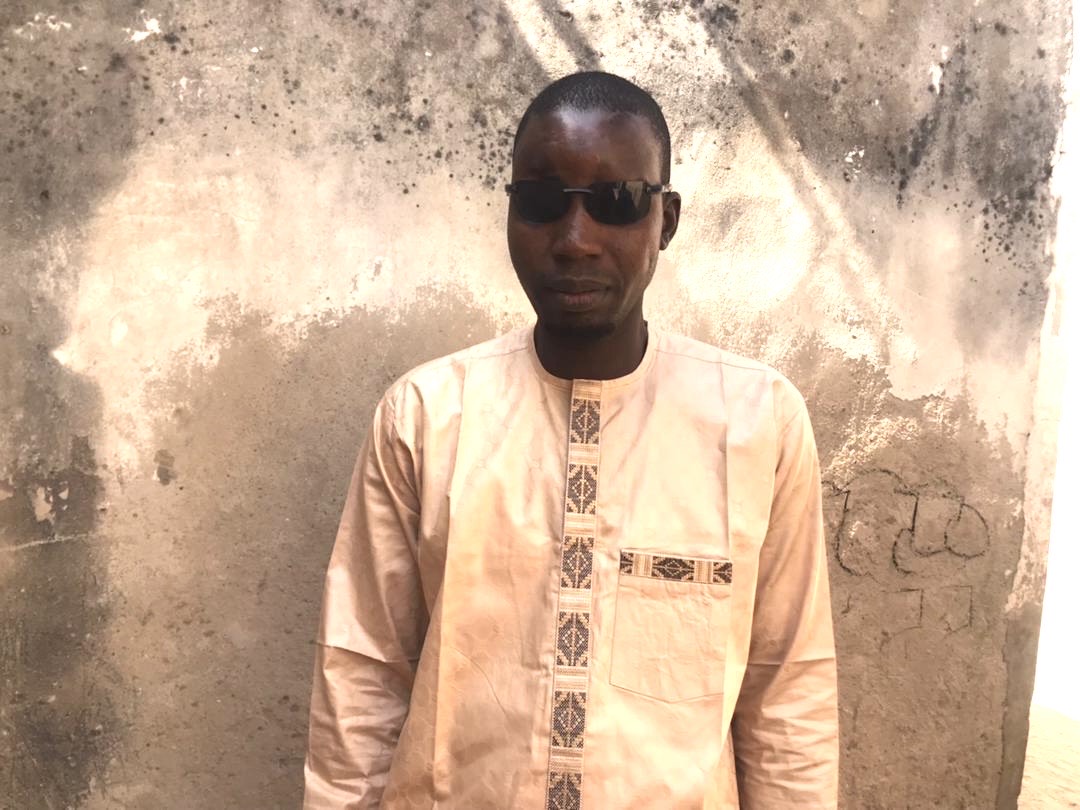
Disability in Borno: A Quiet Struggle
Across Borno State and Nigeria, many persons with disabilities face steep barriers stigma, inaccessible learning environments, and limited support services. Many visually-impaired children are still kept at home due to social beliefs or financial constraints.
Abubakar believes education is key to breaking these barriers.
“To my fellow disabled people whether born with it or affected later like me, I say: accept yourself and stay strong. Disability is not the end. It is part of Allah’s plan.”
He also appeals to parents:
“Do not hide your disabled children. Enroll them in school, especially the free ones. Education gives them dignity. It helps them grow in both western and Islamic knowledge.”
Abubakar does not ask for sympathy; he asks for opportunity. His story is a simple truth loudly lived. When education meets determination, disability loses its power to limit. On 3rd December 2025, the world marks the International Day of Persons with Disabilities, established by the United Nations General Assembly in 1992 to promote the rights and well-being of people with disabilities. On this day, Abubakar’s footsteps echoing through the corridors of the school he once attended serve as a powerful reminder of what becomes possible when society chooses inclusion over pity.
Rukaiya Ahmed Alibe