

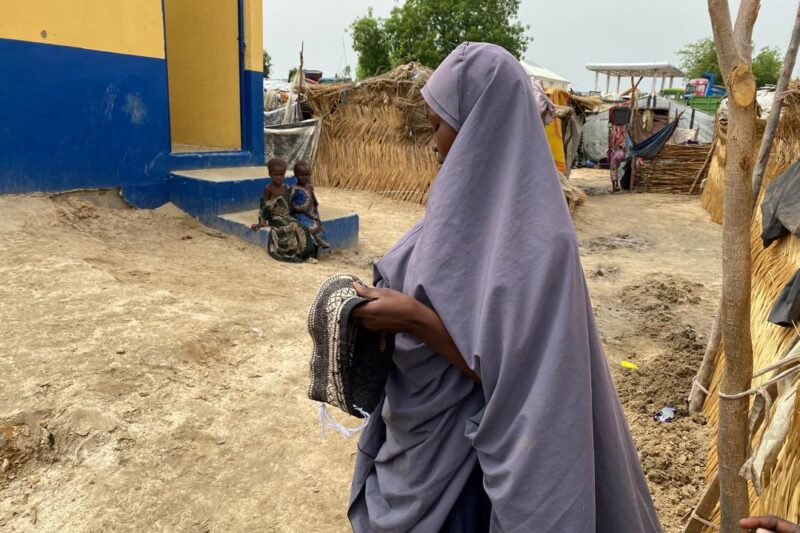
For many families, the responsibility of providing food, paying school fees and meeting daily household needs traditionally falls on the husband. But when a husband dies, disappeared or is detained during the decade-long insurgency, women are often left to shoulder these responsibilities alone.
Across many communities in Maiduguri, Borno State, northeastern Nigeria, years of insurgency have disrupted lives and livelihoods, leaving many widows and other women as the primary providers for their children and other dependents.
With limited income, education and few opportunities for stable employment, these women are forced to find ways to keep their households going despite difficult circumstances.
LIFE INSIDE MASHIDIMAMI CAMP
At Mashidimami Internally Displaced Persons’ Camp, the condition of the shelters tells a story of families trying to survive with very little.
The tents, once meant to provide safety and comfort, are now faded, torn and weakened by months of exposure to the sun and rain.
In many of them, holes have been covered with pieces of old clothing, rags and mats woven from leaves. Some tents sag and look as though they could give way at any moment, while others have openings that leave families exposed to the weather.
Each patch and tear is a reminder of how long families here have endured difficult living conditions.
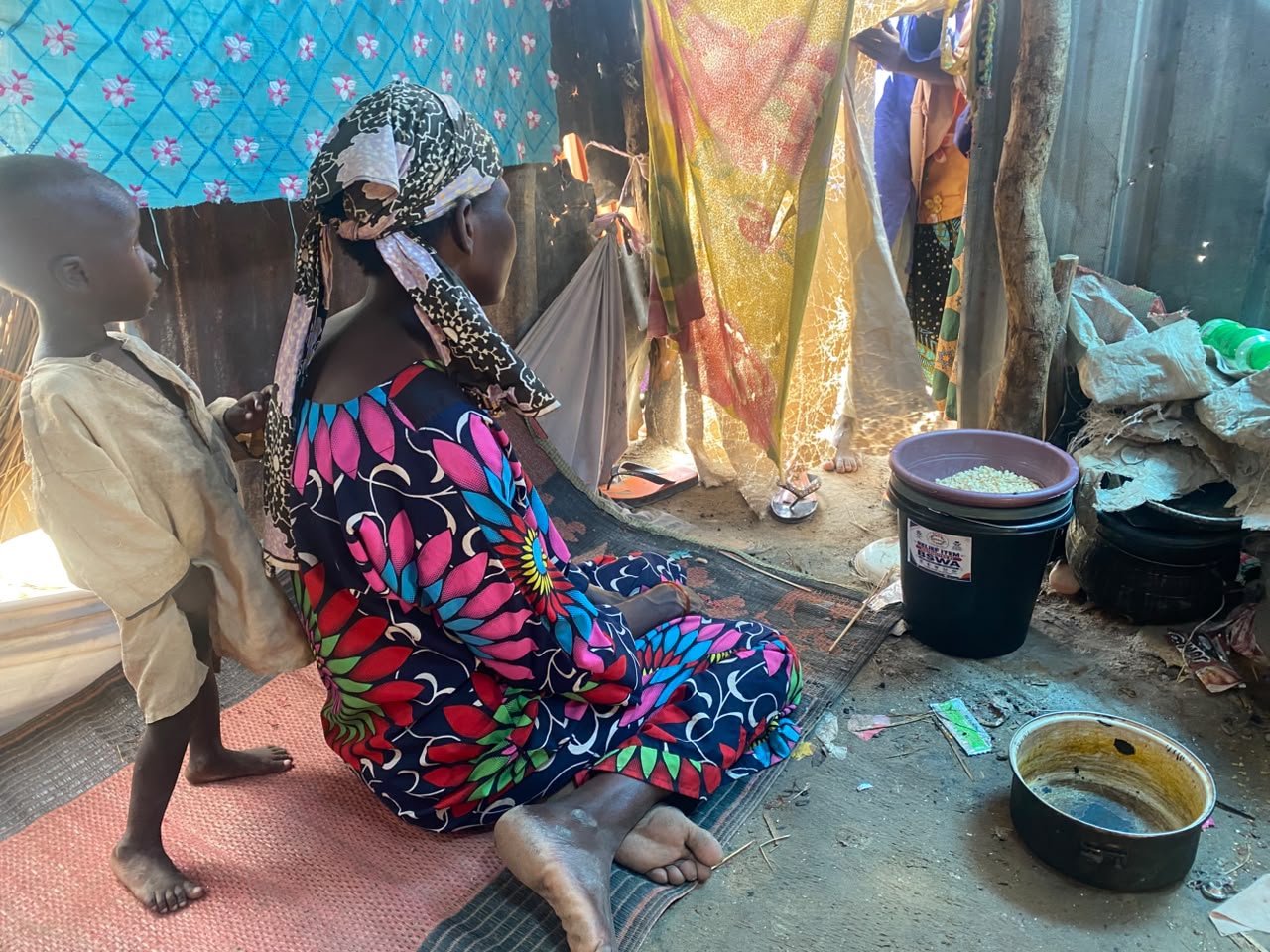
For 35-year-old Gambo Jidda, however, her tent is more than a worn-out shelter. It is where she and her three children sleep, prepare their meals and try to maintain a sense of home despite having so little.
About three years ago, her husband, Abba Jato, was killed by insurgents while he was in the bush searching for firewood to sell. His death left Gambo to raise their three children and provide for the family on her own.
LIFE BEFORE EVERYTHING CHANGED
“We lived happily, and we were satisfied when we could afford three square meals a day.”
Her voice grew softer as she remembered the life she once shared with her husband, Abba Jato.
“My dear, hardworking husband was a firewood seller. He would go to the forest, cut firewood and sell it as a means of livelihood. He always made sure our needs were met,” she said.
Wearing a worn-out red hijab riddled with holes, Gambo fought back tears, trying to hide them behind a faint smile as she reminisced about the life she once knew.
“I lived happily with my husband for a good 15 years,” she added.
Abba Jato earned between ₦2,000 and ₦3,000 a day selling firewood. He did his best to provide for the family and ensure that their children went to school.
“My children were enrolled in school when we lived in Molai before his death. After his death, we moved to our present location. Since then, they have had to drop out of school.”
For a mother who once watched her children go to school, the reality is painful. Her youngest child is now only able to attend an Islamiyah, where he receives Qur’anic education.
THE STRUGGLE TO SURVIVE
Gambo and her three children now struggle to make ends meet. She takes on different jobs whenever an opportunity comes her way.
Sometimes, she works on farms and earns about ₦1,500. At other times, her eldest son, who is only 12 years old, goes out to hawk sachet water.
Whatever they earn helps the family put food on the table for that day.
The situation becomes even more difficult during the rainy season. When it rains, her son cannot go out to hawk water. As a result, there are days when the family can only afford to eat once or twice.
At the front of Gambo’s tent, small portions of kolji mandawa (roasted groundnuts) are neatly packed in clear plastic bags and arranged on a tray. Nearby, she sits with a needle and thread, carefully knitting a local cap.
“I also manage to sell groundnuts here in the camp, and sometimes I sew local caps,” she says. “It can take me weeks to finish a cap just to make a little money. I just keep doing whatever work I can to keep my family going.”
Gambo is doing everything she can—selling groundnuts, sewing caps, working on farms and relying on whatever small opportunity comes her way.
For this family, survival is not an occasional concern. It is a battle they face every day.
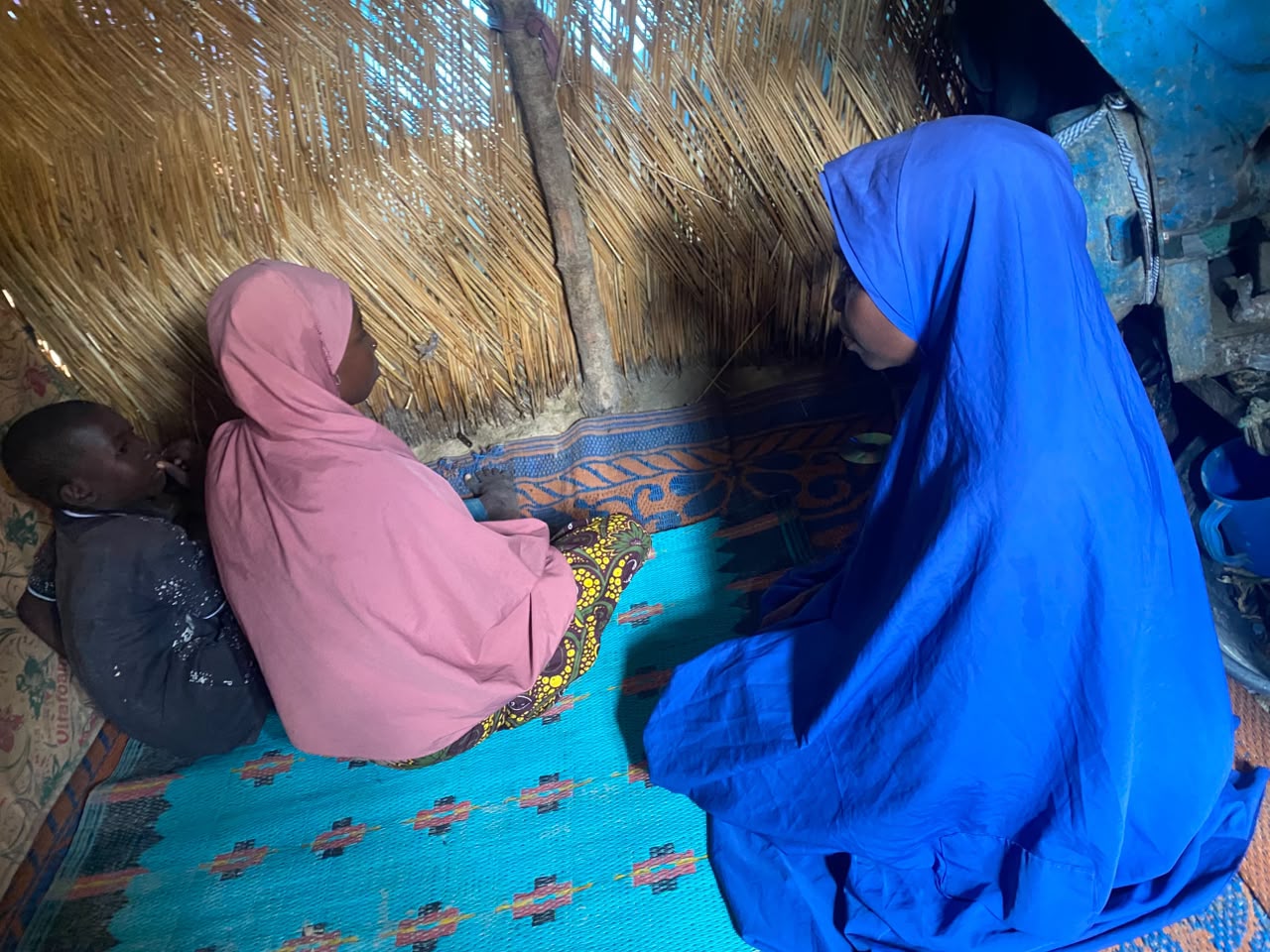
Photo credit: @Falmataaminamohammed
A MOTHER’S FEAR OF WHAT COMES NEXT
In Al Miskin Camp, 30-year-old Aisha sits quietly under a tree as she recounts the challenges of raising her five children alone.
“Life has been a nightmare. I have been the head of my household since my husband died from a brief illness eight years ago. Since then, I have been responsible for providing for my five children.
“My two older children, aged 12 and 9, go to Gamboru Market to hawk sachet water. They are still very young, but they have had to become part of the struggle to keep our family fed. Whatever little they earn helps us put food on the table.
“Sometimes, I also sew local caps. It can take me several weeks to complete the work, but I take whatever little I earn and add it to what my children bring home. We combine everything just to make sure there is something for all of us to eat.
“As a mother, it hurts me to see my children working at such a young age instead of going to school, but I have no other means to provide for them.”
But now, Aisha’s greatest fear is what will happen when the camp closes.
“The camp is about to close, and I have nowhere to go with my five children. The fear has even affected my health.
“I lie awake wondering where we will sleep and how I will protect my children if we are forced to leave. I have no home to return to, no stable income and no savings to start again.
“What I need most is a safe place for my children and me to call home,” she added.
THE ROLE OF NON-GOVERNMENTAL ORGANISATIONS
For women like Gambo and Aisha, whose lives have been shaped by loss, displacement and economic hardship, support from government and non-governmental organisations could make a significant difference.
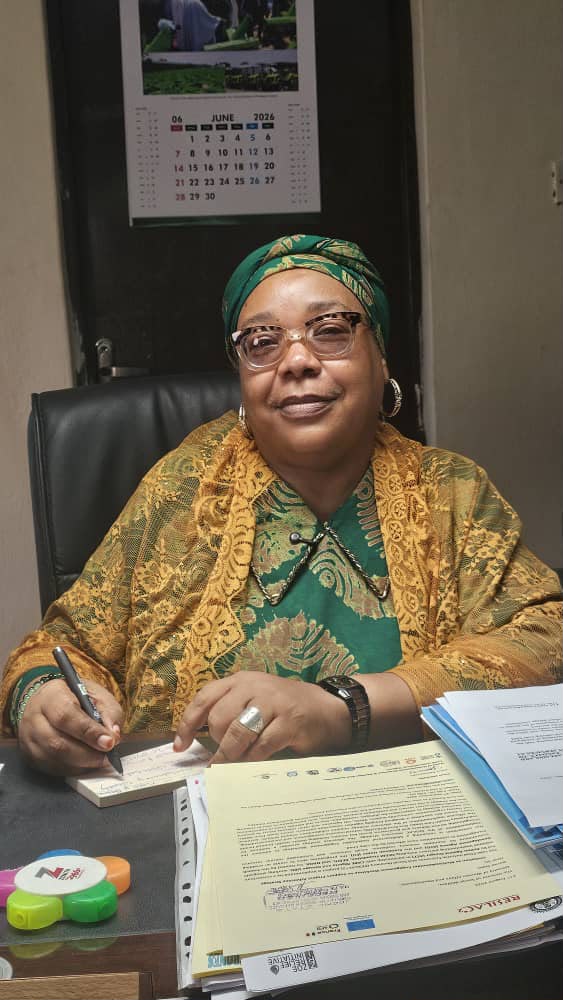
Comrade Lucy D. Yunana, Executive Director of Women in the New Nigerians and Youth Empowerment Initiative, says the challenges facing women in such circumstances are not new.
“This has been a long-standing challenge facing women of this kind. From the years I have spent working to promote and defend women’s rights here in Borno State, I have seen how difficult life can become for women who suddenly find themselves responsible for their families,” she said, speaking from her office.
According to Yunana, the government’s Renewed Hope Agenda has provided support to some vulnerable women, but she believes more needs to be done to ensure that those who are yet to benefit are reached.
“The government has a policy called the Renewed Hope Agenda, which has been supporting women in such situations. However, in my opinion, the government needs to expand these initiatives so that they can reach more beneficiaries, especially now that there is economic hardship in the country,” she said.
She cited social protection programmes in some developed countries as an example of how vulnerable households can be systematically identified and supported.
However, she noted that the humanitarian space has become increasingly difficult as the operations of some international organisations have reduced following the withdrawal of international support.
AS AID SHRINKS, GOVERNMENT FACES GROWING PRESSURE
The Borno State Ministry of Women Affairs and Social Development says it is exploring alternative ways of supporting vulnerable women and families as the withdrawal of some international aid organisations creates gaps in humanitarian assistance across the state.
The Director of Women Affairs in the ministry, Falmata Umar Lawan, said the ministry would continue to provide assistance to women who approach it with urgent social and economic challenges, despite difficulties associated with limited resources.
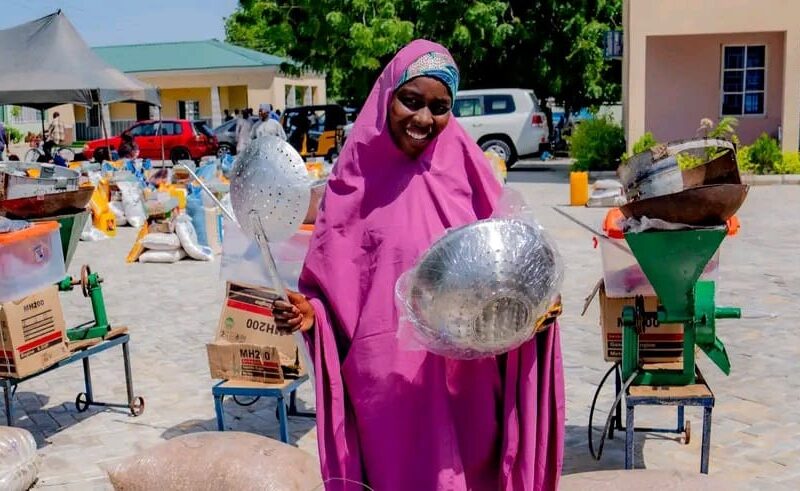
Lawan said women who seek assistance from the ministry would not be turned away without receiving some form of support. Such interventions, she explained, could include skills training, start-up tools or educational support for their children.
She explained that the ministry has traditionally worked with international humanitarian organisations to provide assistance to vulnerable women, particularly those facing economic hardship and other social challenges.
However, she said the withdrawal of some of these organisations has created a gap in support, making it necessary for the state government and other stakeholders to explore alternative mechanisms for reaching vulnerable households.
For women living in Maiduguri’s camps, however, the immediate concerns remain unchanged: where the next meal will come from, how they will keep a roof over their children’s heads and whether they will have an opportunity to rebuild their lives.
For Gambo, Aisha and many others like them, support is not simply about receiving temporary assistance. It is about having the means to provide for their families, keep their children in school and regain the dignity and stability that years of hardship have taken away.
FALMATA AMINA MOHAMMED


Leave a comment