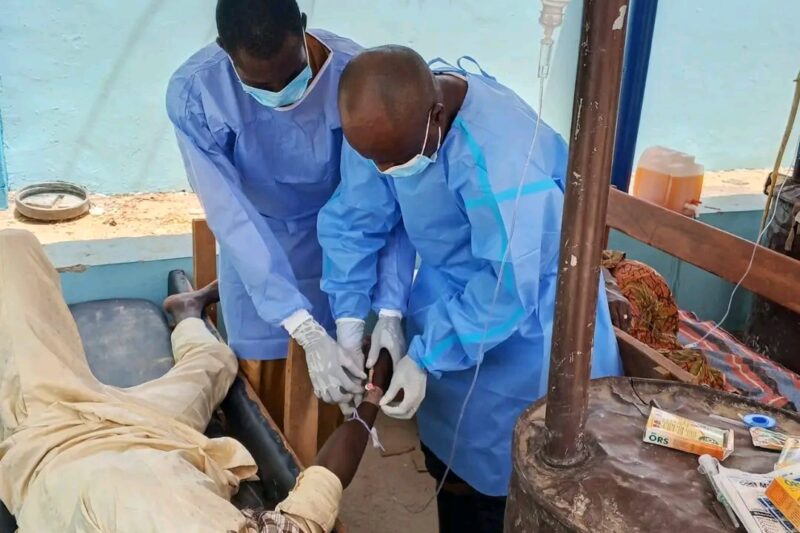
In the heart of Borno State, a fierce cholera outbreak has torn through communities, bringing unimaginable loss, remarkable stories of survival, and pushing an already strained health system to its limits. As authorities and humanitarian partners work tirelessly to contain the spread, families are left piecing together their lives amid grief and uncertainty.
According to a UNICEF Nigeria humanitarian flash recent update, the outbreak has hit hard across multiple local government areas, including Maiduguri, Jere, Mafa, Konduga, Magumeri, Monguno, Kwaya Kusar, and Ngala. Suspected cases have also emerged in Gwoza, Bama, Banki, and Mobbar, with Maiduguri recording the highest number of affected wards, followed by Jere and Konduga.
Adults aged 21 to 50 represent the largest share of cases, followed by adolescents and children — a stark reminder of how this invisible enemy spares no one.
Survivors Recount Their Ordeal
At the Brigadier Abba Kyari General Hospital in Ngaranam, survivors share haunting memories of how quickly the disease took hold, leaving them fighting for their lives against severe dehydration and weakness.
Fifty-year-old Ya Kellu, discharged alongside her two grandchildren, vividly remembers the terror of those days.
“I thought I would not make it,” she said.
She described how severe vomiting and diarrhoea struck without warning, rapidly weakening her entire family.
“I could not even get up to move a step. I was lying helplessly, vomiting and stooling at the same time.”
Rushed to the Ngaranam facility, they were diagnosed with severe dehydration and immediately started on intravenous fluids and oral rehydration therapy.
“The doctors told us we had lost a lot of body fluids and were close to going into shock,” she said.
After three intense days of treatment, the family was discharged. The hospital not only provided food but also disinfected their home and supplied essential hygiene items — soap, buckets, chlorine, detergents, and oral rehydration salts — offering a lifeline for recovery and prevention.
At the Njimtilo Cholera Treatment Centre, 17-year-old Yati recounted a similarly desperate journey.
“My father called the emergency number when my condition became worse,” she said.
An ambulance arrived at night, stopping along the route to pick up others battling the same symptoms before reaching the overwhelmed facility.
“When we got there, there were many patients already waiting for treatment.”
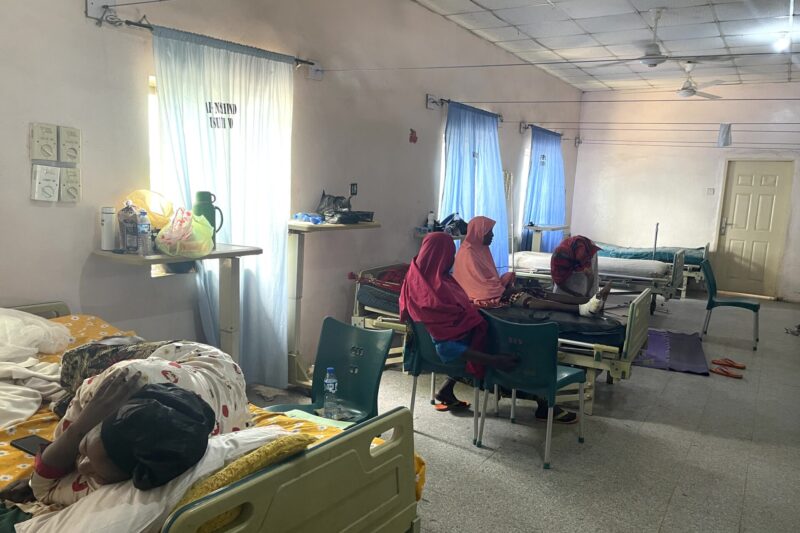
Stabilised with intravenous fluids and later moved to the female ward, Yati expressed gratitude for the care she received, even as she noted the strain on sanitation facilities caused by overcrowding.
“There were many patients, including children, women and elderly people,” she said.
Now recovering, she prepared to return home, holding her mother’s hand with a faint smile as she was discharged with hygiene materials and relief items.

A Family Loses Its Breadwinner
For Yabaye, a widow in Maiduguri, the outbreak delivered a devastating blow that no medical intervention could reverse. When visited in her home, she sat quietly in a red hijab, clutching her tasbeeh and whispering prayers, her voice trembling as tears flowed.
Her husband had initially recovered from treatment but suffered a sudden relapse.
“We took him back to Abbagaram Primary Healthcare Centre, but he did not survive,” she said.
A devoted father and the family’s sole provider for over 20 years, his loss has left them shattered.
“We have lost our breadwinner. Our hope is only in God now.”
Community Resilience in Action
Despite the pain, communities are rising to support one another and curb further transmission. Community leaders report residents mobilising quickly in response to the crisis.
Alhaji Massa Bulama Shettima, community leader of Shehu Sanda Kyarimi Road in Shehuri South, Maiduguri, reflected on the heavy toll.
“Many of those who died were good and valuable members of our community,” he said.
Residents coordinated with emergency services for patient transport and called for fumigation of affected areas. Working hand-in-hand with partners like UNICEF and the International Rescue Committee (IRC), they cleared refuse and unblocked drainage channels.
“Now there is much relief in our community,” he said.

Health System Pushed to the Brink
Ibrahim Mohd, Surveillance Focal Person at the Brigadier Abba Kyari General Hospital, Ngaranam, painted a picture of an overwhelmed system at the outbreak’s peak.
Patients were first managed in a single ward before a dedicated Cholera Treatment Centre (CTC) opened on May 7.
“The number of patients continued to rise, which made it necessary to open a Cholera Treatment Centre on May 7,” he said.
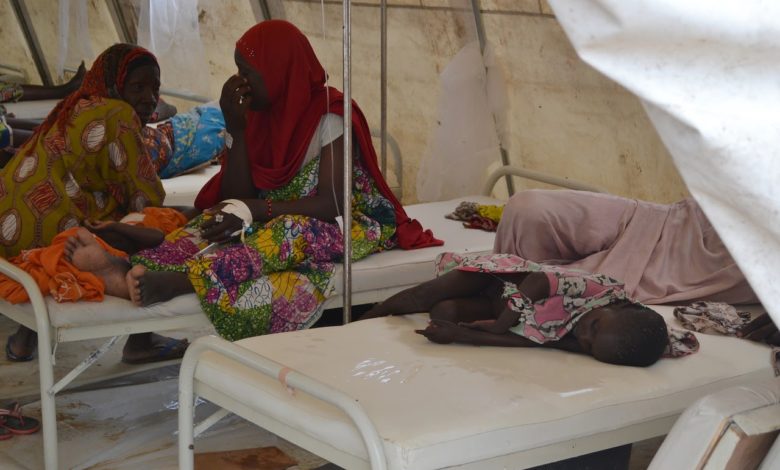
As numbers surged, the hospital set up five to six emergency tents. Beds ran short, with some children sharing beds amid the chaos.
“There were moments when it felt like the patients would never stop coming,” he said.
Additional centres were established, including the Njimtilo CTC, Dalaram Clinic CTU, and Abbagaram CTU. Managing anxious relatives added another layer of complexity.
Yet signs of improvement have emerged.
“As of June 14, we were receiving around 200 or fewer patients daily, compared to about 300 two weeks earlier,” he said.
He credits this progress to the coordinated efforts of health workers, government authorities, and humanitarian partners.
Alarming Scale of the Outbreak
According to Médecins Sans Frontières and the Borno State Ministry of Health, the outbreak had reached 7,850 suspected cases and 74 deaths as of early June 2026, with 7,439 patients treated between May 1 and June 7.
Cumulative data from the State Ministry of Health’s Cholera Emergency Operations Centre, as cited in the UNICEF update, reports 8,457 cases and 85 deaths (including community deaths), with a case fatality rate of 1.05%.

A United Humanitarian Response
Organisations like Save the Children Nigeria, in collaboration with state authorities and backed by the Nigeria Humanitarian Fund and UN OCHA, have been on the frontlines. Their cholera treatment centre in Konduga has treated more than 1,300 patients, discharged over 960, and maintained a case fatality rate below 1%.
UNICEF continues to bolster the response through health, WASH, and RCCE interventions — delivering critical supplies such as Ringer’s Lactate, Oral Rehydration Salts (ORS), rapid diagnostic test kits, tents, and beds, while providing vital coordination and technical support.
Root Causes and the Path Forward
Dr. Sale Abba Kaza, Head of the Borno State Contributory Healthcare Management Agency, links the outbreak to deep-rooted challenges.
“Limited access to safe water and sanitation continues to worsen the situation,” he said.
Many households depend on shallow wells and contaminated surface water, compounded by poor waste management and open defecation. Seasonal rains have only intensified the risks.
“The provision of safe and clean water is essential, alongside strengthened hygiene awareness campaigns,” he added. “The public should temporarily refrain from consuming raw vegetables and fruits as a precautionary measure.”
As the outbreak persists across Borno State, health authorities and partners are scaling up treatment capacity and response efforts. While daily admissions are declining in some centres, this crisis has laid bare the urgent need to address longstanding vulnerabilities in water, sanitation, and healthcare infrastructure.
The people of Borno have shown incredible strength and solidarity in the face of adversity. Their stories of loss, survival, and resilience remind us that behind every statistic is a human life — and that collective action remains our greatest hope in overcoming this challenge.
FALMATA AMINA MOHAMMED