

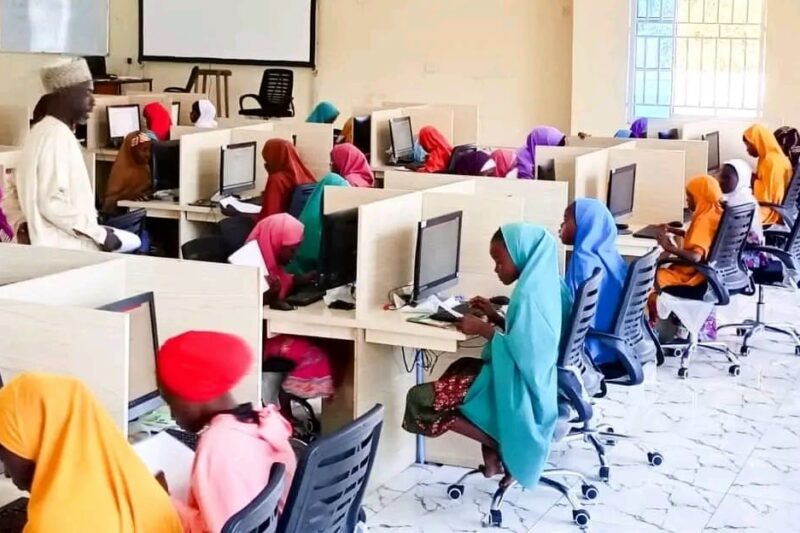
Despite challenges such as limited internet connectivity, literacy barriers and inadequate resources, young women in Northeast Nigeria are developing digital solutions to address community needs and improve access to information.
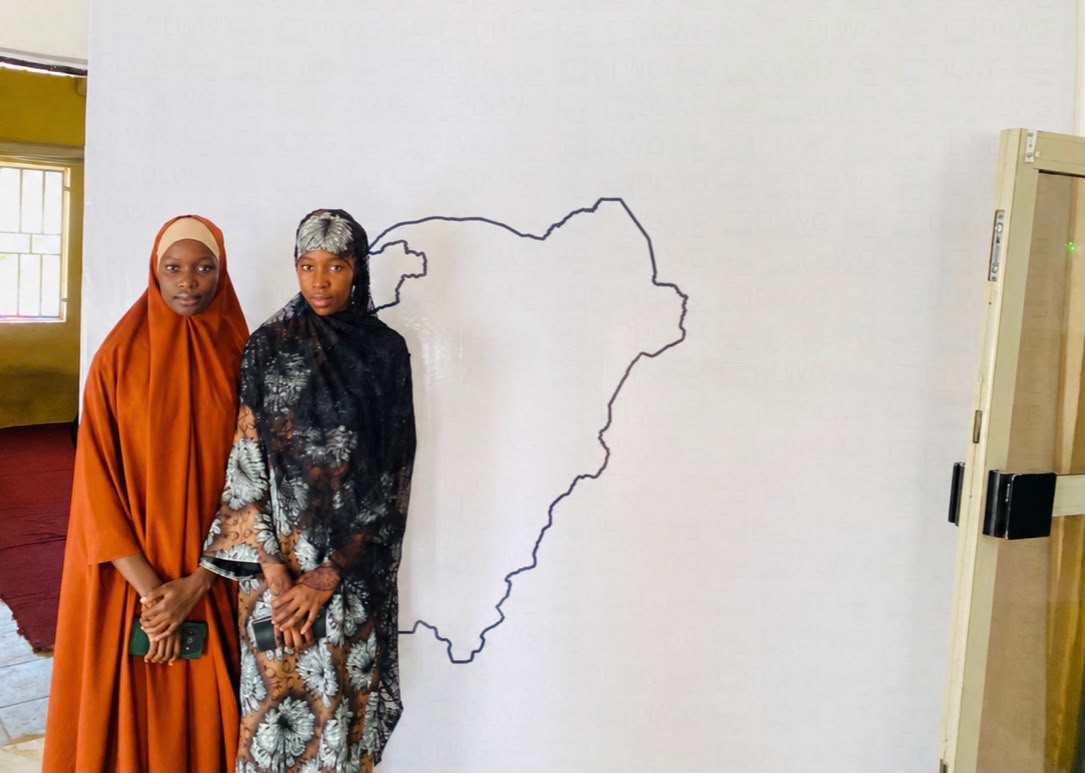
Among them are Hauwa Abba Bulama, 18, and Zara Maina Maaji, 19, two 200-level Computer Engineering students at the University of Maiduguri, who are working with two other students to develop an application called Fasahar Al’umma, meaning “People’s Talent.”
AN APP DESIGNED FOR COMMUNITIES
Hauwa said the idea emerged from observing the challenges faced by communities affected by insurgency, limited literacy and poor internet connectivity, particularly following the 2024 Maiduguri floods.
“I looked around and observed that I was surrounded by people affected by the insurgency, people who do not know how to read and write, and people whose communities experienced poor network connectivity following the 2024 floods,” she said.
The team developed the concept in September 2026, spending about a week on the idea and another two weeks developing its content.
Hauwa explained that the application works both online and offline, offering educational materials, quizzes, learning activities, entertainment content and information on protecting personal data.
It also provides links to external websites, including the Tertiary Education Trust Fund (TETFund), where users can access information about scholarships, grants and research funding.
With a download size of approximately 1.21 megabytes, some features work without internet access, although its artificial intelligence features currently require connectivity.
The developers said they tested the application with 10 people, who particularly enjoyed its quiz feature. Although it is not yet on Google Play Store or Apple App Store, users can access it through a QR code and a web application compatible with Android and iOS devices.
FUNDING AND MENTORSHIP CHALLENGES
The students said limited access to laptops, data and funding had affected their work, adding that they had not received institutional support.
The first North-East Women and Girls Digital Investment Summit in Maiduguri provided an opportunity to showcase the application to a wider audience.
Zara said only their families and friends knew about the project before the summit, where participants were able to scan its QR code and explore the application.
The team hopes to introduce Kanuri and Babur languages alongside its existing Hausa and English options.
“We also want to be mentored by experts to improve our skills,” Zara said.
The students hope to improve the application before graduating and expand its reach across Borno State, the Northeast and other parts of Nigeria. They identified funding, technical mentorship, workspace and partnerships with government institutions and private companies as essential to achieving this.
SMART STUDY TARGETS SCHOOLCHILDREN
Another innovation showcased at the summit was Smart Study, developed by Amina Hassan Daya of the Yobe State Information Technology Development Agency (YITDA).
Amina said the application, developed less than a year ago, is designed to help primary and secondary school students access learning materials without necessarily requiring internet connectivity.
Based on the Nigerian education curriculum, it includes Mathematics, English, Business Studies, basic literacy, exercises and quizzes.
However, the application is not yet available to the public, as the team is still testing its usability and features. Amina said an approved testing exercise would accommodate between 500 and 1,000 students, with plans to make it available by 2027.
She identified reaching students in rural and hard-to-reach communities across the Northeast as a major challenge.
“We need so much support because it has to do with education. The government should collaborate with us by giving us support to access villages and hard-to-reach communities,” she said.
She also called for technical assistance and support from research and statistics organisations to assess the application’s effectiveness.
CALL FOR GREATER WOMEN’S INCLUTION
For Brenda Nkamo, founder of Kamson Charity Foundation and one of the summit organisers, the innovations demonstrate the importance of creating more opportunities for women in technology and leadership.
She said women remain underrepresented in politics, banking, innovation hubs and engineering firms, not because they lack talent but because they are often denied opportunities.
“This is not because women don’t have the talent, but because they are not given the room for inclusion,” she said.
Brenda called on public and private institutions to create more opportunities for women in digital technology and innovation.
The experiences of the young innovators highlight the potential of locally developed technology to address community challenges. However, sustained access to funding, mentorship, digital infrastructure and institutional support will be crucial to turning their ideas into solutions that can benefit more people.
FALMATA AMINA MOHAMMED




Leave a comment